Ruby / माणिक
Ruby is the red variety of corundum. Discuss your preferred colour, shape and sourcing requirements.
EnquireRuby is the red variety of corundum. Learn how colour, clarity and treatment affect its appearance, then discuss your preferred cut and sourcing requirements with our team.
Explore the collection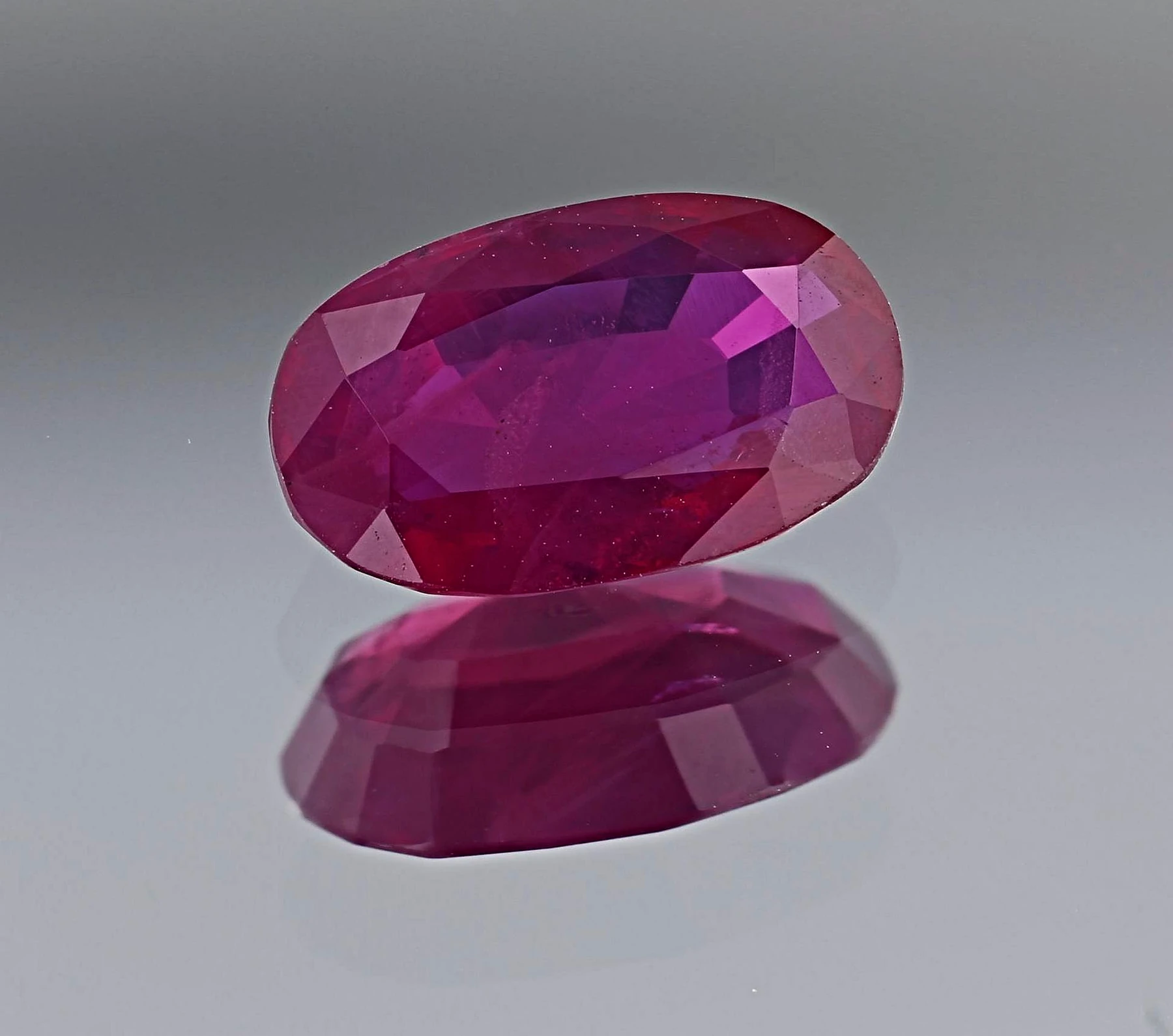
Ruby is the red variety of corundum, the same mineral family as sapphire. Chromium gives it its red colour, which can show orange or purple overtones. Small differences in colour and transparency can noticeably change the appearance of a stone.
Ovals and cushions are common ruby shapes. Faceting brings out brightness, while a smooth domed cabochon can reveal a star effect in suitable material. Inclusions are expected, but prominent fractures can affect both appearance and durability.
Compare appearance, cutting and treatment information when choosing a stone for your jewellery.
Look at the balance of red, brightness and any orange or purple overtones. A trade colour name alone does not describe the whole stone.
Check how the stone looks from above. A shallow cut can leave a pale, see-through area where light escapes, often called a window.
Establish whether the ruby has been heated or fracture-filled. Glass-filled ruby requires different care from untreated or heat-treated material.
GIA identifies and evaluates ruby rather than assigning it an overall quality grade. Its report can distinguish natural from laboratory-grown material, name detectable treatments and, when requested and possible, give an opinion on geographic origin.
Ruby ranks 9 on the Mohs scale and is generally suited to frequent wear. For untreated or heat-treated stones, use warm soapy water and gentle cleaning. Clean fracture-filled, cavity-filled or dyed material with a damp cloth; confirm treatment before ultrasonic or steam cleaning.
Both are corundum. Ruby has a predominantly red colour; corundum in other colours is called sapphire. The boundary between ruby and pink sapphire can involve differing trade conventions.
Yes. Inclusions are common. Some fine needle-like inclusions can soften and spread colour, while large inclusions or surface-reaching fractures may reduce transparency or durability.
No. Heating and filling fractures with glass are different treatments. GIA notes that untreated and heat-treated rubies are durable, while glass-filled stones need greater care.
Learn more from the Gemological Institute of America.
Tell us about the stone, cut or design you are looking for.
Make an enquiry